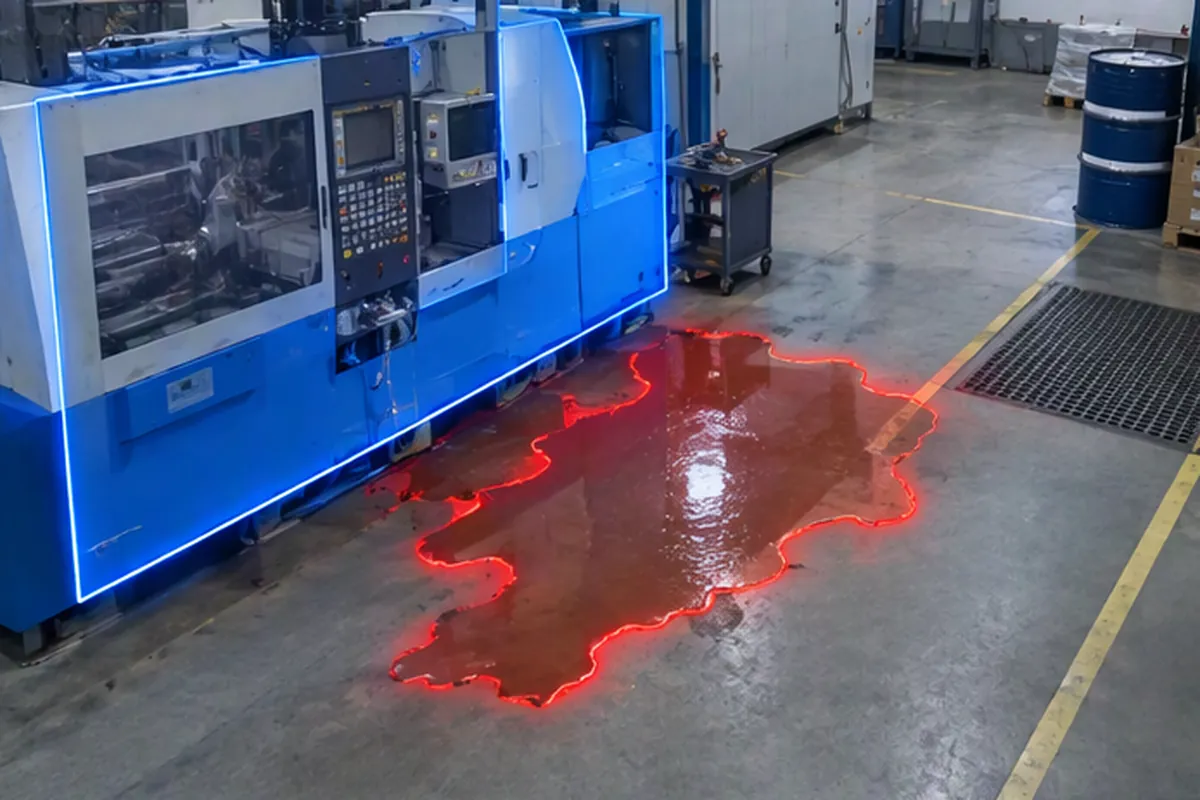
Spills, leaks and wet floors
Detects liquid on the floor, chemical spills, and oil, water or drum leaks.
- All site types

Site conditions detection is computer vision that watches the state of the workplace rather than the people in it: spills and leaks, trip hazards, blocked aisles and exits, missing or blocked fire equipment, unsafe stacking, debris, waste, dust and standing water. AURA flags each condition so it gets fixed before someone gets hurt.
Site Conditions & Emergency Readiness covers 11 use cases in the SAFVR detection library: Spills, leaks and wet floors, Trip hazards, Blocked aisles and walkways, Blocked exits and fire doors, Fire equipment missing or blocked, Unsafe stacking, Unattended objects and debris, Waste, bins and pests, Dust and air quality, Flooding and standing water and Eyewash and safety shower activation.
Spills, leaks and wet floors
Each use case runs on the cameras you already have, with zones and rules set for each camera view. Use cases marked Camera + sensor also pair the camera with an IoT sensor or wearable.
Detects liquid on the floor, chemical spills, and oil, water or drum leaks.
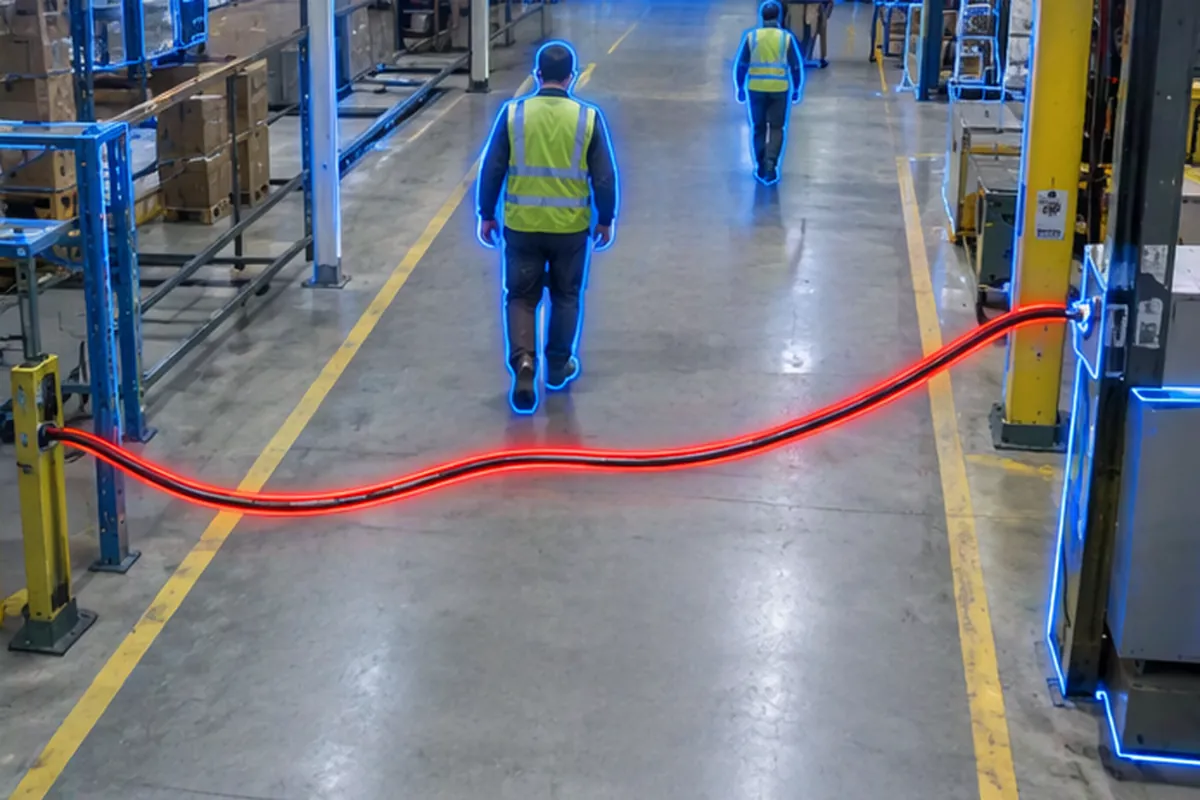
Spots loose cables, hoses and objects lying across walkways.
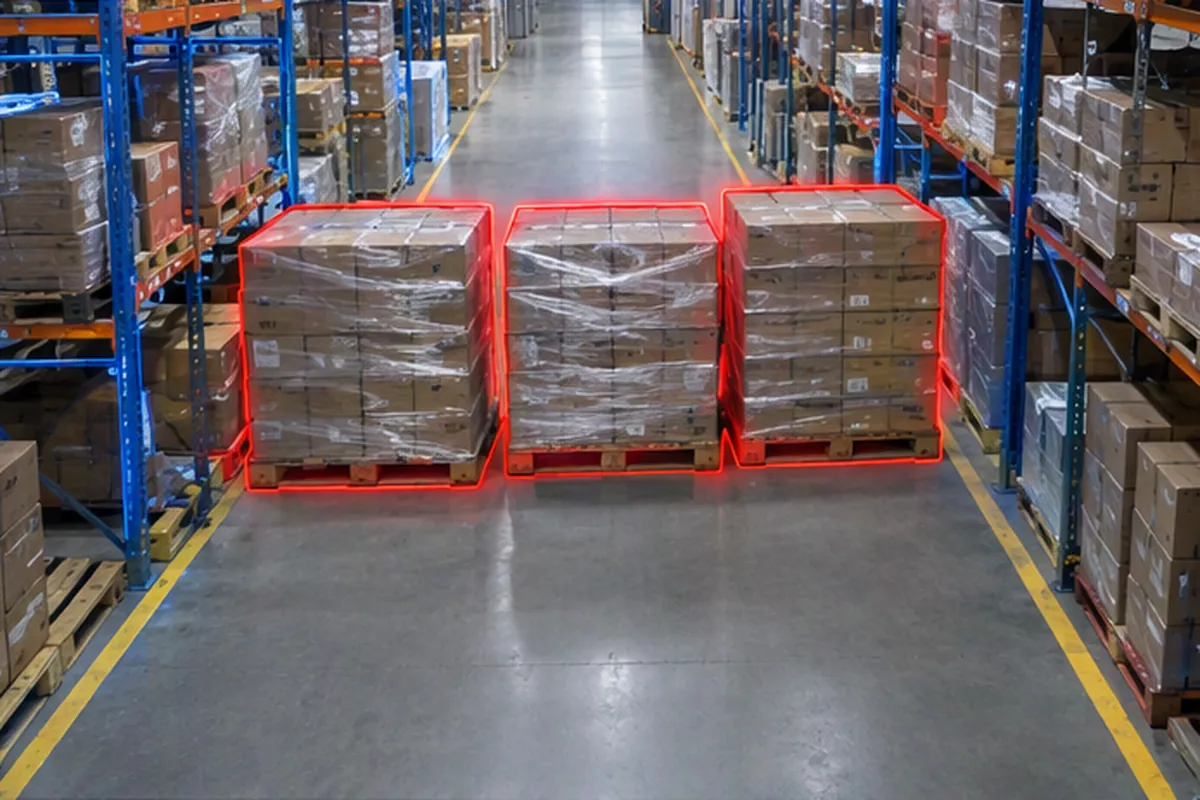
Flags pallets, trolleys and materials blocking aisles and pedestrian walkways.
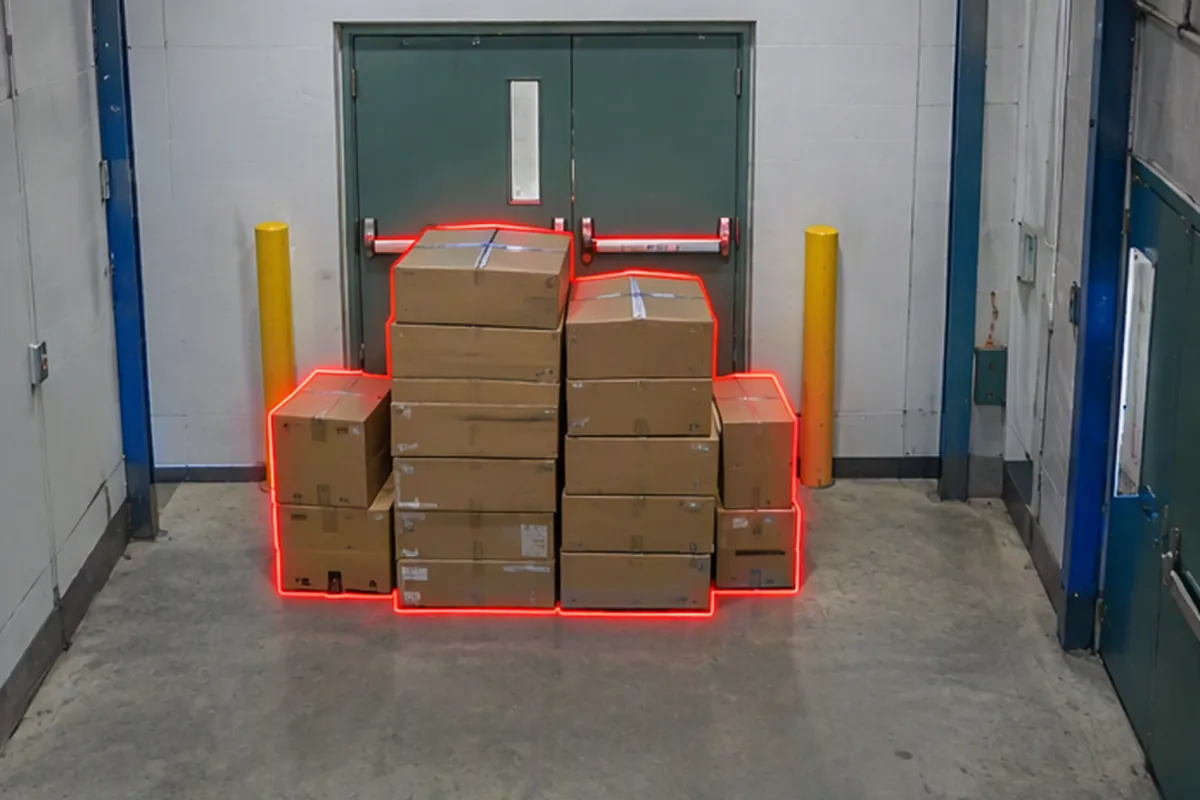
Detects blocked emergency exits and evacuation routes, and fire doors propped open.
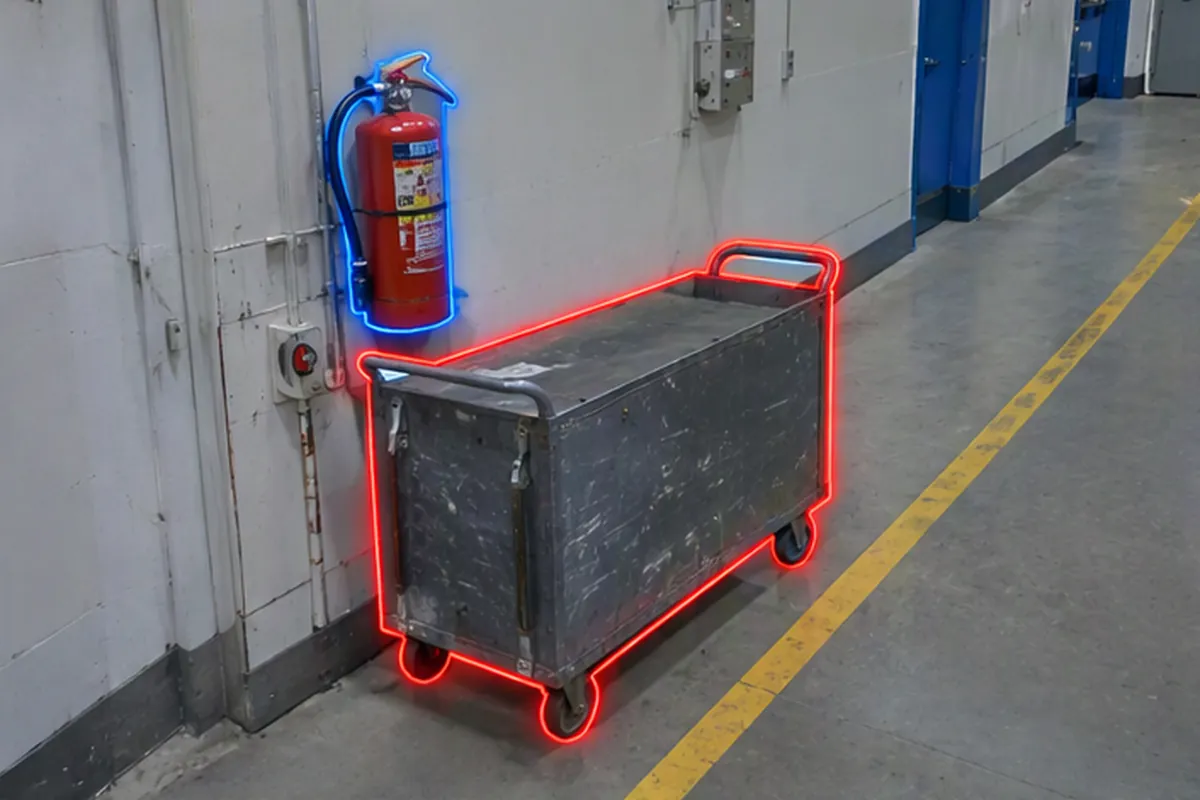
Checks that extinguishers and hose reels are in place and can be reached.
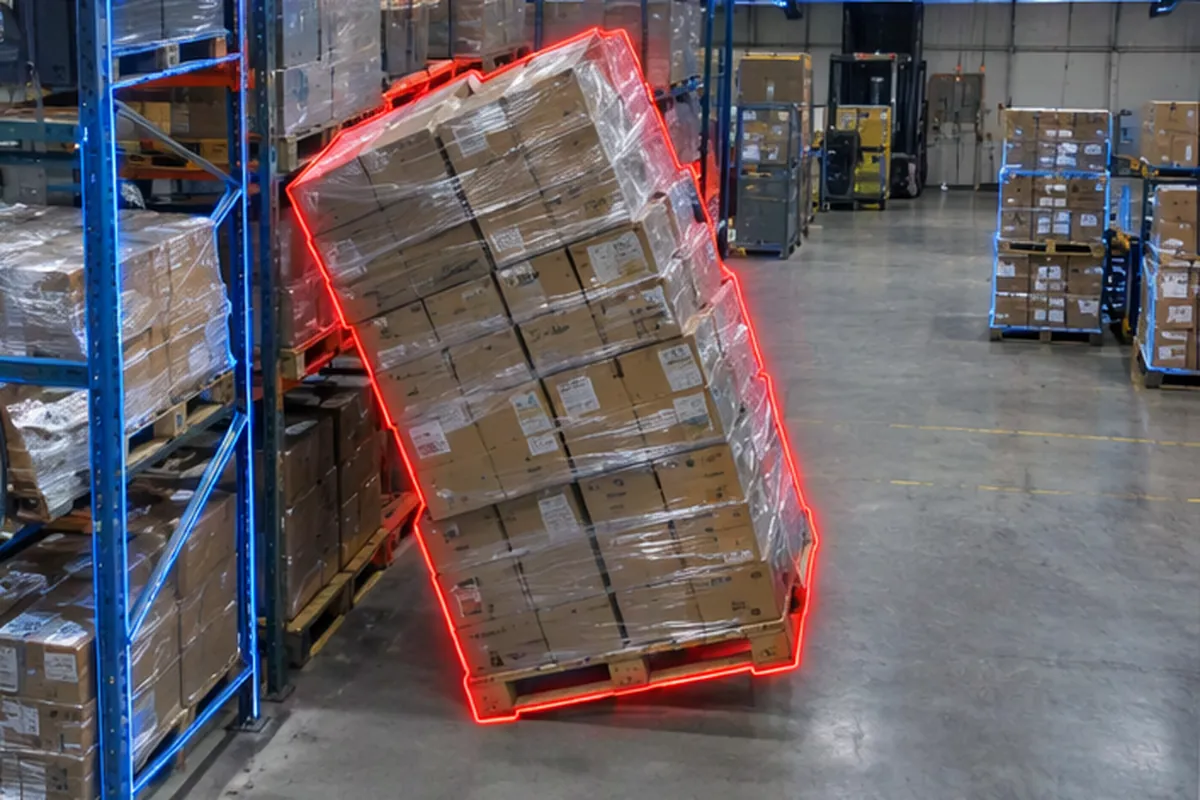
Flags unstable stacks, overhanging pallets and loads at risk of collapse.
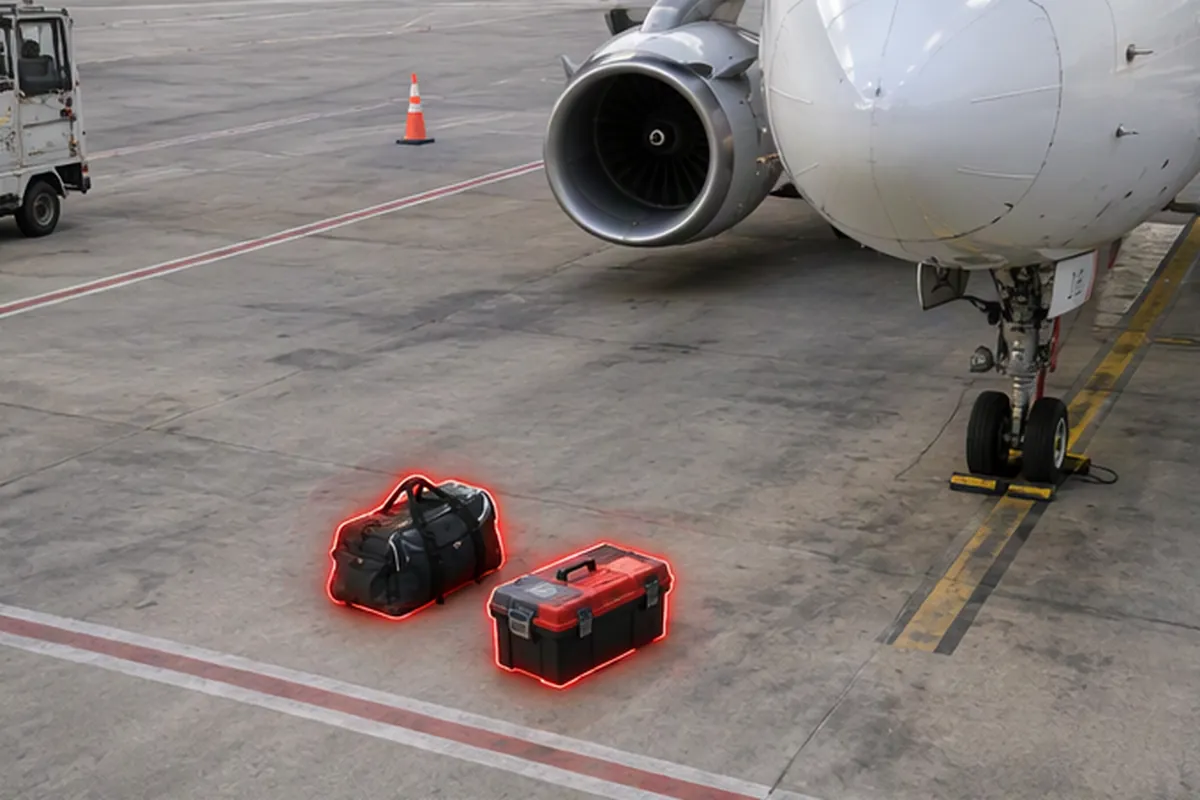
Spots objects left where they shouldn't be, from bags in a corridor to equipment on an apron.
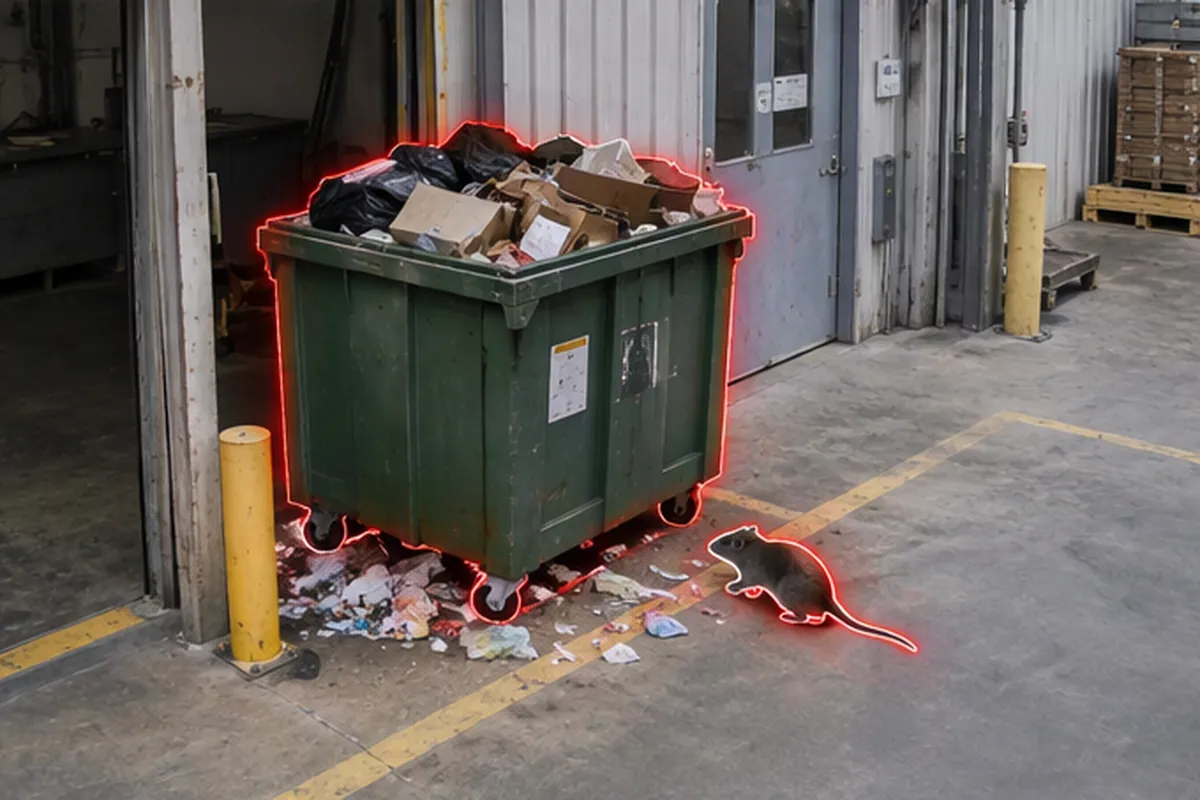
Detects overflowing or open bins, exposed waste, and rats or stray animals on site.
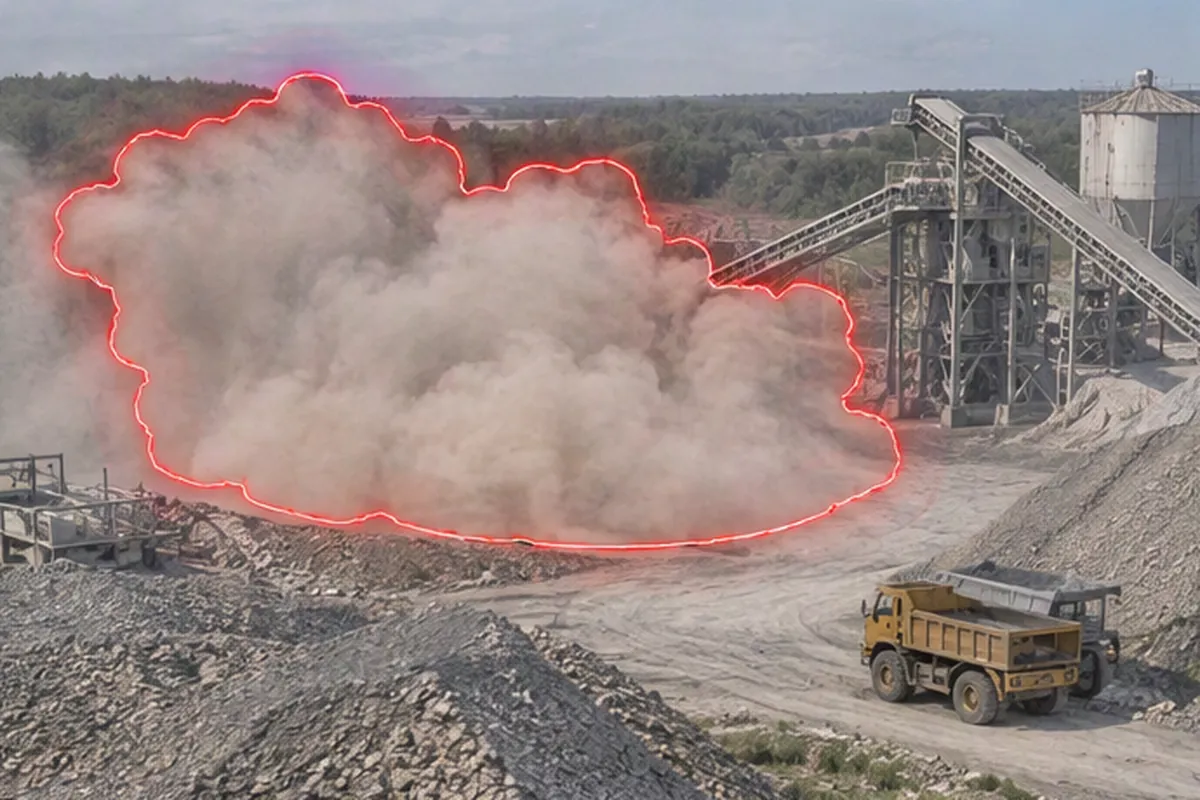
Detects visible dust clouds and exposed soil, and can pair with PM2.5 and PM10 sensors.
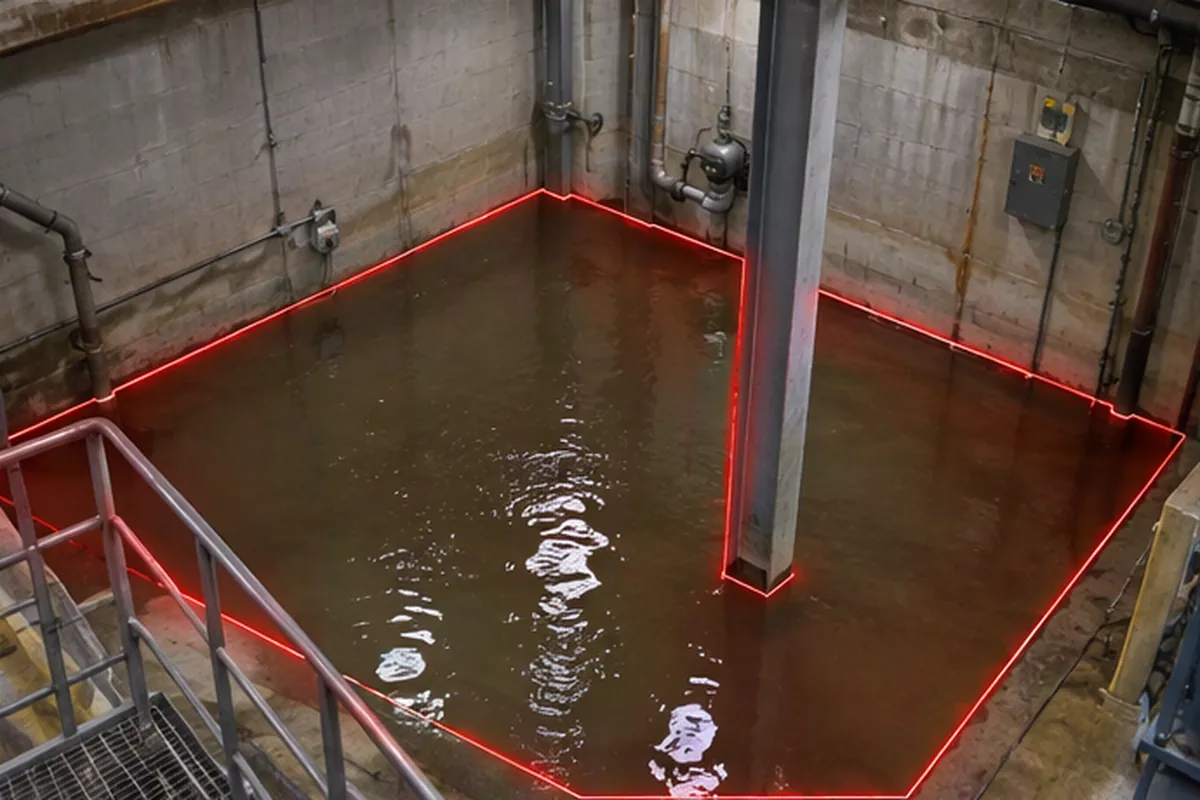
Spots water building up in pits and low areas, and can pair with water-level sensors.
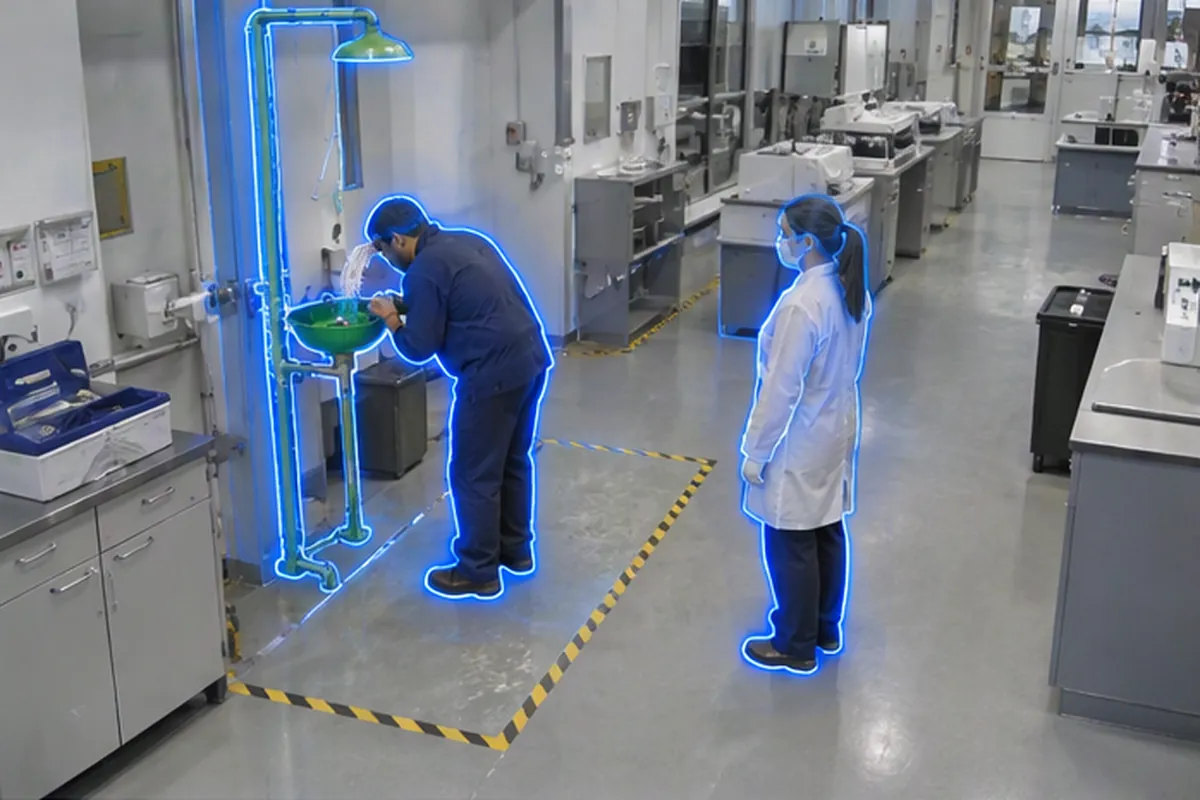
When an eyewash or safety shower is triggered, the camera shows who needed it and why.
Most come from conditions anyone could see: a spill, a cable, a pallet in the walkway. They stay because nobody owns them in the moment.
An exit or extinguisher blocked for an hour is fine until it's the hour there's a fire. Continuous checks take the gamble away.
Events by area and shift show where housekeeping slips, which makes 5S and audit follow-ups specific.
The same use cases read differently on each kind of site. Open a site type to see how they apply there.
Coolant and oil leaks, swarf, cables and pallets build up around lines. Spill, trip and aisle checks keep the floor clear.
Dust, scale, spills and badly stacked coils and bags are common around production.
Pallets and wrap left in aisles, overhanging loads and blocked exits are daily risks. Stacking, aisle and exit checks cover them.
Debris, loose materials, standing water and dust change daily. Site condition checks keep walkways and exits clear.
Fluid leaks, parts in walkways and blocked fire equipment are flagged around lines and stores.
Spills in labs and production, eyewash activations and blocked exits all need a fast response. AURA flags each one.
Dust clouds, standing water in pits and spillage around conveyors are constant. AURA flags them for the next clean-up.
Oil and chemical leaks, flooding and blocked escape routes carry high consequences in process plants.
Bags, equipment and larger debris left on the apron are a risk to aircraft and crews. Unattended object checks help ramp teams find them early.
Every use case runs inside the AURA loop. A detection is only the start: the value comes from what happens next.
AURA watches each camera for the use cases you switch on, with zones, lines and rules drawn for that view.
Detect on the platformAlerts reach the right person with a snapshot and clip, and become tracked actions that get closed out.
Act on the platformEvents feed micro-training and toolbox talks built from your own footage, so lessons stick.
Improve on the platformTrends by area, shift and task show where risk is building, so you can fix it before the next incident.
Prevent on the platform8 use cases
6 use cases
8 use cases
8 use cases
8 use cases
9 use cases
11 use cases
9 use cases
7 use cases
8 use cases
5 use cases
READY TO SEE IT ON YOUR CAMERAS?
30 days. Your existing CCTV. Nine hazard categories live on day one — PPE, fall risk, vehicle proximity, restricted zones, and more. You see real detections from your floor before you commit to anything beyond the pilot.
No new hardware. Existing IP cameras work. Setup in days.